
Is Your Child Breathing Dirty Air? The Simple Fix Most Parents Miss
Your home's air may be affecting your child's health more than you realize. Kids, especially toddlers, are more vulnerable to indoor pollutants like dust, mold, and chemicals because they breathe faster and spend time close to the floor where pollutants settle. Symptoms like coughing, sneezing, or trouble focusing could be signs of poor air quality.
One overlooked solution? Reusable furnace filters. Unlike disposable filters that lose efficiency quickly and need frequent replacement, reusable filters last 10+ years, save money, and improve air quality. With simple cleaning every month, these filters reduce allergens, mold spores, and other harmful particles, creating a safer environment for your family.
Key Points:
- Kids inhale more air per pound than adults, making them more at risk from pollutants.
- Reusable furnace filters are a cost-effective way to improve indoor air quality.
- They reduce waste, save over $470 in 10 years, and last up to 25 years with proper care.
Switching to reusable filters is an easy step toward cleaner air and healthier kids.
How Poor Air Quality Harms Children
Indoor Air Pollutants and Their Health Effects
The air inside your home might seem safe, but invisible dangers could be lurking, especially for children. Biological pollutants like mold spores (often found in damp areas), dust mites hiding in bedding and furniture, and pet dander can travel through your HVAC system, spreading throughout your living space. Then there are chemical pollutants, or volatile organic compounds (VOCs), which are released by everyday items like paints, cleaning sprays, air fresheners, and even new furniture. Formaldehyde, a common VOC, is often found in pressed-wood furniture and flooring. Add to this the combustion byproducts from gas stoves, wood-burning fireplaces, and tobacco smoke, which release harmful substances like fine particulate matter (PM2.5), nitrogen dioxide, and carbon monoxide.
The problem is even worse for toddlers and young children who spend much of their time closer to the ground. Heavier particles and chemicals often settle at floor level, exposing crawling babies and playing kids to higher concentrations of these pollutants. This creates a particularly hazardous environment for them, as explained further below.
Why Children Face Greater Risk
Children’s bodies handle air differently than adults, making them more vulnerable to harmful pollutants. For one, they breathe faster than adults, which means they take in more air - and with it, more pollutants - relative to their body size.
Additionally, their lungs and immune systems are still maturing, leaving them less equipped to deal with harmful substances. As Christine Johnson from Kaiterra points out:
"A mildly irritating pollutant for an adult could be a severe problem for a child"
This heightened sensitivity can result in stunted lung development, a higher likelihood of asthma, and other long-term health concerns.
Symptoms That Signal Poor Air Quality
Certain symptoms may suggest that your home's air quality is affecting your child. Respiratory issues like persistent coughing (especially at night), sneezing, a constantly runny nose, and throat irritation are common signs. Physical symptoms might include watery eyes, eczema flare-ups, dark circles under the eyes (often called "allergic shiners"), and dry, chapped lips.
Changes in behavior can also be a red flag. If your child seems more irritable, struggles to sleep, has trouble focusing, or appears unusually tired, it could be linked to the air they’re breathing. A key clue? If their symptoms noticeably improve when they’re outdoors or away from home, poor indoor air quality might be the culprit.
sbb-itb-adeab55
Improving indoor air quality for children's safety
Why Standard Furnace Filters Fall Short
Understanding why standard furnace filters don’t fully protect your home’s air quality can help you make better choices for your family’s health.
Poor Filtration of Small Particles
Most disposable furnace filters are designed to protect your HVAC system - not your family. They’re good at catching large debris like dust clumps and pet hair, which could damage equipment. But when it comes to smaller, more harmful particles, they fall short.
Tiny pollutants, such as PM2.5 particles, mold spores, bacteria, and allergens, can easily slip through these filters. Once in your home, these microscopic particles settle on surfaces or linger in the air, increasing the risk of respiratory problems, especially for children. So, while your HVAC system stays protected, your family’s health might not be.
And the problems don’t stop there. These filters also come with hidden costs.
The Cost of Disposable Filters
Replacing disposable filters regularly can quickly become an expensive habit. To keep airflow and air quality at acceptable levels, frequent filter changes are necessary. For many households, this recurring expense can strain the budget.
Plus, there’s an environmental downside. Every time you toss out a used filter, it adds to landfill waste. Over time, the volume of discarded filters contributes to a growing ecological problem.
But the financial and environmental costs aren’t the only issues - disposable filters also lose their effectiveness surprisingly fast.
How Disposable Filters Lose Effectiveness
From the moment they’re installed, disposable filters start collecting dust and debris, which restricts airflow. This buildup forces your HVAC system to work harder, potentially driving up energy bills. By the time you’re ready to replace the filter, it may have been underperforming for weeks, allowing pollutants to recirculate through your home.
These limitations make it clear: a better, longer-lasting solution, like reusable furnace filters, is worth considering.
Why Reusable Furnace Filters Work Better
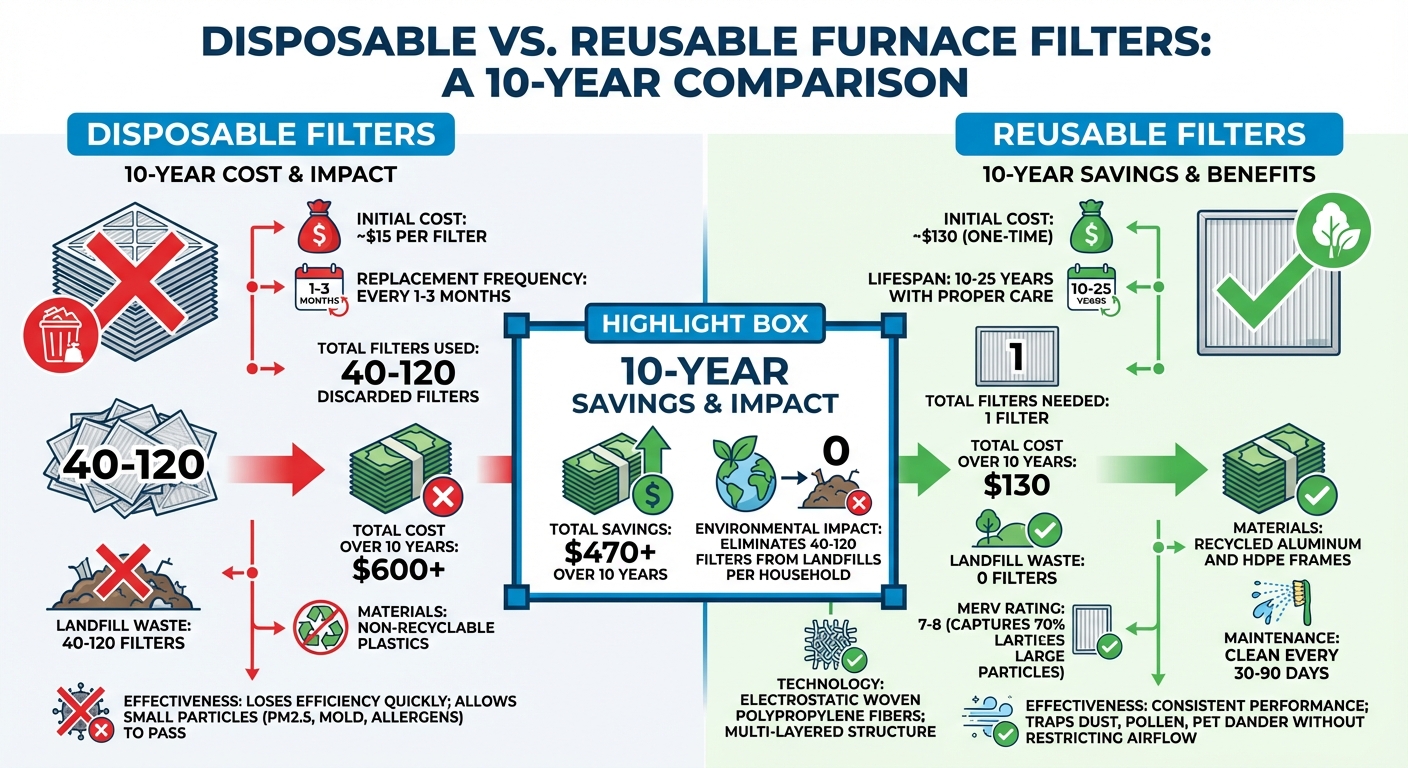
Reusable vs Disposable Furnace Filters: Cost Savings and Environmental Impact Over 10 Years
Reusable furnace filters offer a practical and efficient way to maintain clean air in your home. Unlike disposable options, these filters are designed for longevity while consistently delivering high performance. Here's how they make a difference.
How Reusable Filters Trap Particles
Reusable filters rely on electrostatic technology to effectively capture airborne contaminants. The woven polypropylene fibers generate a static charge that attracts particles like dust, pollen, and pet dander. This design ensures efficient filtration without restricting airflow, which can be an issue with high-MERV paper filters.
The multi-layered structure plays a key role: larger particles are trapped in the outer layers, while smaller, microscopic particles are captured deeper inside the filter. This layered approach not only improves air quality but also reduces strain on your HVAC system. Plus, by using these filters, you contribute to reducing waste, as they are built to last and don’t need frequent replacements.
Long-Term Savings and Less Waste
While the upfront cost of a reusable filter is around $130, it quickly pays for itself compared to disposable filters, which typically cost $15 and need replacing every one to three months. Over a 10-year period, this adds up to savings of more than $470.
The environmental benefits are also hard to ignore. Disposable filters can lead to 40 to 120 discarded filters per household over a decade, all ending up in landfills. Reusable filters eliminate this waste entirely. Many are made with recycled materials like aluminum and HDPE frames, avoiding the non-recyclable plastics common in disposables.
Performance and Lifespan
Reusable filters are not just cost-effective - they’re also reliable. Most residential options have a MERV 7 or 8 rating, which strikes a balance between capturing about 70% of large particles and maintaining the airflow your HVAC system needs to operate efficiently.
With proper care, these filters can last an impressive 10 to 25 years. That’s decades of dependable performance without the constant need to check or replace them. Regular cleaning - every 30 to 90 days - is key to maintaining their efficiency. If you have pets, allergies, or live in a dusty area, you might need to clean them more frequently, but the effort is worth it for the long-term benefits.
How to Choose and Care for Reusable Furnace Filters
If you want to keep your home's air quality in check, picking the right filter and maintaining it properly is a must.
Selecting the Right Filter for Your Home
Start by measuring your current filter slot to get the right size. Filters usually list their dimensions, but it’s a good idea to double-check with a tape measure. If your system uses a 3‑inch, 4‑inch, or thicker filter rack, you might need a conversion kit to fit a standard 1‑inch reusable filter.
Pay attention to the filter's MERV rating, which determines how effectively it traps particles. For most homes, a MERV 7 or 8 filter works well, capturing dust, lint, mold spores, and pet dander without putting too much strain on your HVAC system. If your family deals with allergies or you have pets, a MERV 11–13 filter offers extra protection against pollen, bacteria, and smoke particles. Just make sure your HVAC system can handle the higher rating before upgrading.
When installing, look for the airflow arrow on the filter frame. This arrow should point toward the furnace or blower motor for proper operation. Once installed, regular care will keep your filter working efficiently.
How to Clean Your Reusable Filter
Before you remove the filter, turn off the HVAC system at the thermostat. This prevents unfiltered air from circulating through your ducts. Take note of the airflow arrow so you can reinstall it correctly later.
To clean the filter, start by vacuuming off any loose dust. Then, rinse it with water, spraying from the clean side toward the dirty side to avoid pushing debris deeper into the mesh. If the manufacturer allows it, you can use a mild soap, but avoid harsh chemicals entirely.
The most important step? Let the filter dry completely before reinstalling it. Even a small amount of moisture can lead to mold growth in your HVAC system. Give the filter plenty of time to air-dry, either in the sun or in a well-ventilated spot, before putting it back.
When to Clean Your Filter
Check your filter monthly and clean it every one to three months. If you have pets or someone in your home has allergies, you might need to clean it every two to four weeks.
Shu Saito, Founder and CEO of All Filters LLC, advises:
"The cleaning frequency for washable filters depends heavily on your home's conditions, but many homeowners will find themselves cleaning these filters every month to maintain airflow."
During periods of heavy HVAC use (10–14 hours a day), inspect the filter every 30 days. If there’s wildfire smoke or construction nearby, check it weekly. A quick test: hold the filter up to a light. If it looks gray or dusty, it’s time to clean it.
For added convenience, keep a spare clean filter ready to swap in while your main filter dries. This way, your HVAC system always has the protection it needs.
The Benefits for Your Family and the Environment
Switching to a reusable furnace filter comes with three standout advantages: improved air quality for your family, long-term savings, and a positive impact on the planet.
Better Health for Your Children
Cleaner air means healthier kids. Reusable furnace filters reduce dust allergens and mold spores - two common triggers for asthma and allergies. A study involving 219 children with asthma found that simple home improvements, including high-efficiency furnace filters and HVAC maintenance, led to fewer coughs, easier breathing, and a dramatic tenfold drop in mold spore levels.
For children living in areas with heavy air pollution, the stakes are even higher. Research shows that exposure to polluted air can reduce lung capacity by as much as 10%. Using reusable filters helps combat this by keeping indoor air consistently cleaner.
Take the story of Josie Boniface, a three-year-old from Denver diagnosed with asthma. In September 2024, National Jewish Health shared how her mother, Erica, improved their home's air quality with high-performance filters and other changes like removing carpets. These efforts helped Josie manage her asthma so effectively that she joined a competitive dance team without her condition holding her back.
These health gains are just the beginning - there's also a financial upside.
How Much Money You'll Save
While reusable filters may have a higher upfront cost, they’re built to last for years, saving you money in the long run. Disposable filters, on the other hand, need frequent replacements throughout the year, which adds up quickly. Over time, the durability and efficiency of reusable filters make them a cost-effective choice.
But the benefits don’t stop at savings or health - they extend to the environment, too.
Reducing Your Environmental Footprint
Disposable filters contribute to growing landfill waste due to their short lifespan and frequent disposal. By opting for reusable filters, you’re cutting down on waste and reducing the number of filters that end up in landfills each year. It’s a simple switch that not only supports your family’s well-being but also helps reduce waste and protect the environment.
Conclusion
The air your child breathes at home plays a key role in their health. Indoor pollutants like dust mites, mold spores, and pet dander can lead to asthma, allergies, and other respiratory issues - especially in children with developing lungs.
A practical way to tackle this issue? Reusable furnace filters. These filters not only improve air quality but also cut costs and reduce waste. Unlike disposable filters that lose efficiency quickly and contribute to landfill waste, a single reusable filter can last 5–10 years, replacing dozens of disposable ones. This means cleaner air for your family and less strain on your wallet.
By switching to reusable filters, you’re investing in better health and a cleaner home environment. Plus, the maintenance is simple: choose a high-efficiency filter that fits your HVAC system, clean it every 1–3 months with lukewarm water and mild soap, and let it dry completely. This small habit keeps your air consistently cleaner and safer.
Your family deserves the best, and giving them cleaner air to breathe is a step in the right direction. Take action today and enjoy the peace of mind that comes with healthier air at home.
FAQs
Will a reusable filter help my child’s asthma or allergies?
Reusable filters can play a role in reducing asthma or allergy symptoms by trapping allergens such as pollen, pet dander, and dust mites. This helps improve indoor air quality, which is especially important for children with respiratory sensitivities. To maintain their effectiveness, regular cleaning and proper upkeep of these filters are crucial. This ensures they continue to contribute to a healthier living environment.
What MERV rating should I choose for my HVAC system?
A MERV 7 rating strikes the right balance between efficient air filtration and maintaining good airflow in your HVAC system. It effectively captures common pollutants like dust and pollen while allowing your system to work smoothly. For most homes, this is a practical choice to enhance indoor air quality without putting extra strain on the system.
How do I dry a reusable filter fast without causing mold?
To dry a reusable filter quickly and avoid mold, make sure it's completely dry before putting it back in place. Lay it on a drying rack or clean towels and let it air dry for several hours. Steer clear of harsh chemicals, dishwashers, or pressure washers, as these can harm the filter. Double-check that it's fully dry to prevent mold or mildew from forming due to leftover moisture.