
Checklist for Fall Furnace Care and Air Quality
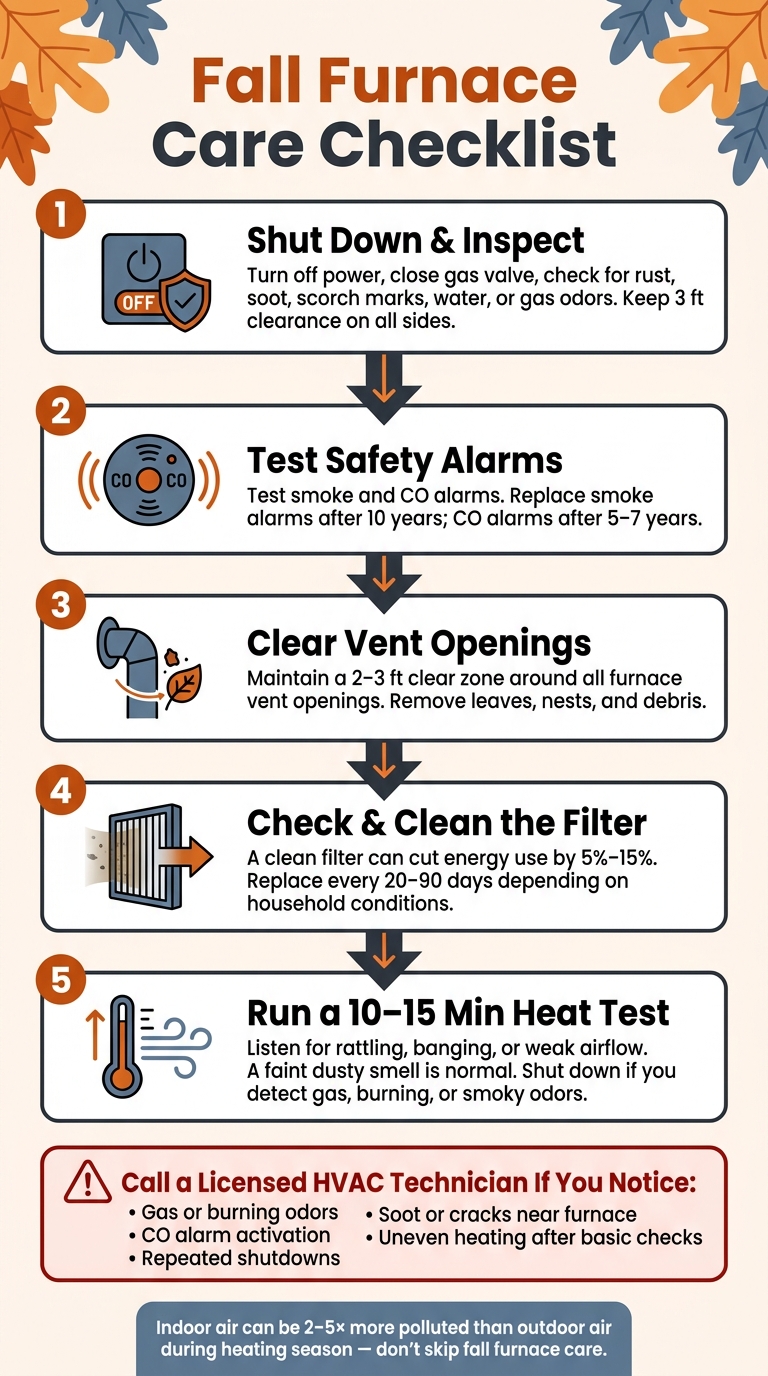
A clogged HVAC filter can increase energy use, and blocked vents can shut a furnace down. I’d keep fall furnace care simple: shut the system off, check for safety issues, clear outdoor vent openings, inspect or clean the filter, and make sure indoor vents stay open.
Here’s the short version of what matters most:
- Start with safety: turn off power, shut the gas valve if needed, and look for rust, soot, scorch marks, water, or gas odors.
- Check alarms: test smoke and carbon monoxide alarms, and replace old units when they age out.
- Clear outdoor vents: keep 2–3 feet around furnace vent openings free of leaves, mulch, and nests.
- Check the filter: a clean filter may cut energy use by 5% to 15%.
- Run a short heat test: let the furnace run for 10–15 minutes and listen for odd noises or weak airflow.
- Watch indoor air: keep humidity at 30% to 50%, vacuum often, and keep supply and return vents unblocked.
- Call a licensed HVAC technician if you notice gas smells, CO alarm alerts, soot, repeated shutdowns, or poor airflow that doesn’t improve.
If I had to sum up the article in one line, it would be this: do the simple checks before cold weather starts, and don’t ignore warning signs that point to a safety problem.
Fall Furnace Care Checklist: 5 Steps Before Cold Weather Hits
5 Things You Should Do Every Fall to Prepare Your Furnace for Winter | How to Prep your Furnace
sbb-itb-adeab55
1. Safety and Basic Furnace Inspection
Before you touch anything on the furnace, make sure the system is fully off. Skip that step, and things can go bad fast.
Turn Off Power and Check the Furnace Area
Set the thermostat to Off, switch off the furnace, cut power at the breaker, and close the gas shutoff valve if you have a gas furnace. To close it, turn the handle a quarter turn so it sits perpendicular to the pipe. Then wait until the blower and burners are fully quiet before you open any panels.
Once the system is off, take a slow look at the cabinet and the area around it. Check for rust, soot, scorch marks, water at the base, or any unusual odor. Keep at least 3 feet of clearance on all sides of the furnace. Move away boxes, paint cans, cleaning supplies, and anything else that could start a fire or get in the way. If you see scorch marks, standing water, or smell strong gas, do not restart the furnace. Call a licensed HVAC technician.
With the unit off, the next step is to check the outside openings.
Check Vents, Intake Pipes, and Safety Alarms
Now make sure air can move in and out the way it should.
Go outside and find the PVC intake and exhaust pipes on the exterior wall. On high-efficiency furnaces, that’s where they vent. Check that the openings are clear and don’t have visible debris blocking them.
Then head back inside and test your smoke and carbon monoxide alarms. Press the test button on each unit. If one gives a weak chirp - or nothing at all - replace the batteries. Also look at the manufacturing date on the back. Smoke alarms should be replaced after 10 years, and CO alarms typically after 5 to 7 years, even if they still seem to work.
Run a Short Heat Test and Note Warning Signs
After that, restore power and set the thermostat to Heat. Raise it a few degrees above room temperature and let the furnace run for 10 to 15 minutes. Pay close attention during this test. A faint dusty smell during the first few minutes is normal.
Listen for rattling, scraping, or a loud bang when the burner lights. Check whether warm air reaches your registers within a few minutes. Also notice if airflow feels much weaker in some rooms than in others. Shut the system down if you notice gas, burning, or smoky odors, loud ignition noises, weak airflow, or repeated shutdowns.
If the test looks good, you’re ready to move on to debris and filter care.
2. Clear Outdoor Debris and Protect Airflow
After the indoor safety check, head outside. Leaves and yard waste around vents and outdoor equipment can choke airflow and make your system work harder.
Remove Leaves and Debris from Vent Openings
High-efficiency furnaces often use sidewall-mounted PVC intake and exhaust pipes. These usually sit low on exterior walls, which means leaves can pile up fast. Keep at least a 2–3 foot clear zone around each furnace vent opening. Rake away leaves, pine needles, mulch, grass clippings, and other debris from every pipe termination so air can move freely and loose debris is less likely to blow back later in the season.
When you clean the pipe opening, wear work gloves and eye protection. Use a soft brush or your gloved hand to clear packed debris, cobwebs, or insect nests. Be gentle. You don't want to shove material farther into the pipe. A handheld vacuum with a brush attachment can help with louvers or screens. Don't add extra mesh or fabric over the opening. That can cut down needed combustion air and change the factory vent setup.
A blocked intake or exhaust pipe isn't a small issue. Leaves, snow, or overgrown shrubs can create a dangerous venting problem and may increase carbon monoxide risk inside the house. If your furnace shuts down after windy days or heavy leaf drop, check the outdoor vents first before assuming something inside the unit failed.
Check Shared HVAC Components Outside
If your home has an outdoor heat pump or condenser, clear that area too. Leaves and grass clippings packed around the coil make it harder for the unit to exchange heat with outdoor air. That can lead to longer run times and less comfort indoors.
Most HVAC manufacturers recommend 12–24 inches of clear space on all sides of an outdoor unit, plus 3–5 feet of open space above it. Pull leaves and twigs from around the base by hand, then rinse the exterior fins lightly from the top down with a garden hose. Skip the pressure washer. It can bend the fins and damage the coil. If shrubs or low branches crept in over the summer, trim them back.
Comparison Table: Ignored Debris vs. Regular Fall Clearing
| Factor | Ignored Debris | Regular Fall Clearing |
|---|---|---|
| Airflow | Partially blocked vents and coils restrict airflow | Near-design airflow with minimal external restriction |
| Furnace Runtime | Longer cycles and more frequent starts increase wear | Shorter, steadier cycles closer to normal operation |
| Vent Blockage Risk | Higher risk of complete blockage during storms; possible system lockouts and elevated CO risk | Low blockage risk; combustion products vent safely |
| Indoor Air Freshness | Stale or musty odors; more debris and moisture odors enter the system | Fresher air and fewer outdoor contaminants circulating indoors |
Walk the outside perimeter at the start of heating season, then check again every 4–6 weeks during heavy leaf fall and after windstorms.
With outdoor airflow clear, check the furnace filter next.
3. Filter Care and Allergen Control Inside the Home
Once the outdoor vents are clear, head inside and check the filter. This is where airflow and allergen control have the biggest day-to-day impact. A clean filter that fits snugly helps air move as it should and catches dust before it drifts through the house.
Inspect the Furnace Filter and Set a Cleaning Schedule
Turn off the furnace before you remove the filter. In most homes, the filter sits on the return-air side of the furnace, either in a slot near the blower compartment or inside a return grille. Slide it out and check the airflow arrow printed on the frame. That arrow should point toward the furnace, not toward the duct opening.
Then give the filter a close look. Gray or dark buildup, pet hair, or debris packed into the pleats are all signs it's due for attention. If it looks packed with dust or you can no longer see light through it, clean or replace it.
How often you check it depends on what's going on in your home:
| Household Condition | Recommended Interval |
|---|---|
| Standard household, no pets | Every 90 days |
| One or two pets or mild allergies | Every 30–60 days |
| Multiple pets, severe allergies, or asthma | Every 20–45 days |
| Peak heating season, heavy use | Every 30 days or as needed |
If you're using a washable filter, clean it on that same schedule instead of swapping it out.
Washable Filter Checklist with ElectroDust
With a reusable filter, cleaning isn't extra maintenance. It's just part of the job. Each time you clean an ElectroDust filter, follow this checklist:
- Wait for the blower to stop before sliding the filter out.
- Vacuum first. Use a soft brush attachment to lift loose lint and dust without harming the mesh.
- Rinse with low-pressure lukewarm water and aim the water flow opposite the airflow arrow. That helps flush trapped particles out instead of forcing them deeper into the media.
- Add mild soap if needed. If buildup is heavy, work a few drops of mild dish soap through the filter, then rinse well until the water runs clear.
- Air-dry upright for at least 12 hours. A damp filter can encourage mold growth and slow airflow. Never put it back in while it's wet.
- Reinstall firmly with the airflow arrow pointing toward the furnace. Before turning the system back on, check the frame for gaps.
Regular cleaning keeps a reusable filter like ElectroDust ready for the next heating cycle and helps support steady airflow and better indoor air quality.
4. Indoor Air Quality Habits for the Heating Season
Once the furnace starts running every day, it keeps cycling the same indoor air through your home. That shifts the fall focus to three things: humidity, dust, and vent clearance. With windows closed, dust, dander, and moisture can build up faster. So the goal is pretty simple: keep the air your furnace moves clean, dry enough, and able to flow freely.
Control Humidity, Dust, and Pet-Related Allergens
Once the filter is taken care of, the next step is managing the air that keeps moving through the house. Dry heat and closed windows can make humidity jump around fast in the fall. Keep indoor relative humidity between 30% and 50%. Use a digital hygrometer to track it. If it drops below 30%, add humidity. If it goes above 50%, bring it down with exhaust fans or a dehumidifier.
Dust and dander need a plain, practical approach. Damp dusting with a microfiber cloth works better than a dry duster because a dry cloth often just sends particles back into the air. A slightly moist cloth traps them instead.
A few habits do most of the heavy lifting:
- Vacuum carpets, rugs, and upholstered furniture at least once a week with a HEPA-filtered vacuum.
- Wash bed linens in hot water every one to two weeks to cut down on dust mites.
- If you have pets, wipe their paws before they come inside to limit tracked-in dirt and debris.
Next, make sure air can move through each room so dust and moisture get pulled toward the filter instead of settling around the house.
Keep Supply and Return Vents Open and Clean
Take a quick look around your vents. Furniture, rugs, and drapes shouldn't block them. Even one blocked return vent can cut airflow by 30% or more. When that happens, the furnace has to work harder, energy use goes up, and more dust settles in corners instead of making its way to the filter.
Leave about 10 inches of clearance around vent openings. That small gap can make a big difference.
It also helps to wipe grilles and registers once a month with a damp cloth. If dust builds up there, the blower can push it right back into the room the next time the system kicks on.
When to Call a Licensed HVAC Technician
Some problems go past basic upkeep. If you're dealing with odd odors, shutdowns, or weak airflow that doesn't improve after simple checks, it's time to call a licensed HVAC technician.
| Warning Sign | Why It Matters |
|---|---|
| Burning, chemical, or gas odors | May indicate a combustion issue |
| CO alarm activation | Requires immediate evacuation and professional inspection |
| Repeated error codes or shutdowns | Points to mechanical or electrical failure |
| Rust, soot, or cracks near the furnace | Potential safety hazard requiring assessment |
| Uneven heating after filter and vent checks | May signal duct leaks or equipment problems |
Call a licensed HVAC technician for combustion, control, or airflow problems.
Conclusion: Fall Furnace and Air Quality Checklist Recap
Follow the checklist in this order: safety, outdoor vents, filter care, and indoor airflow. That sequence matters. Each step sets up the next, and indoor air can be 2–5 times more polluted than outdoor air during months when the windows stay closed. That’s a pretty strong case for making this part of your fall routine.
A washable ElectroDust filter can make fall filter upkeep easier and cut down on waste.
Keep the checklist somewhere you’ll see it - on your phone, in a binder, or near the furnace. Then give it a quick review each fall before the first cold snap.
FAQs
How do I know if my furnace problem is dangerous?
Watch for symptoms like lingering respiratory problems, persistent headaches, fatigue, or a cough that won’t go away. Those signs can point to poor air quality or harmful gases like carbon monoxide.
Unusual sounds matter too. If you hear whistling or rattling, check it out right away. Install carbon monoxide alarms, and shut down the system if you think something’s wrong.
What happens if I leave vents closed?
Leaving vents closed can cut airflow and make it uneven across your HVAC system. When that happens, more dust and allergens may move through your home because the system isn’t filtering air as well as it should.
To help protect air quality and keep the system running well, don’t block vents unless there’s a clear reason to do it. Also check that your washable filter fits flush, with no gaps, and is completely dry before you put it back in.
How often should I clean a washable furnace filter?
For the best performance, clean your washable furnace filter every 1 to 3 months and check it monthly for buildup.
If you have pets, smokers, allergy sufferers, or a dusty home, clean it every 30 days. And during peak heating or cooling seasons, you may need to clean it more often to keep airflow moving the way it should.